- Solutions
ENTERPRISE SOLUTIONS
Infuse new product development with real-time intelligenceEnable the continuous optimization of direct materials sourcingOptimize quote responses to increase margins.DIGITAL CUSTOMER ENGAGEMENT
Drive your procurement strategy with predictive commodity forecasts.Gain visibility into design and sourcing activity on a global scale.Reach a worldwide network of electronics industry professionals.SOLUTIONS FOR
Smarter decisions start with a better BOMRethink your approach to strategic sourcingExecute powerful strategies faster than ever - Industries


Compare your last six months of component costs to market and contracted pricing.


- Platform
- Why Supplyframe
- Resources
Chinese New Year is an annual event in which factories shut down in one of the world’s largest manufacturing hubs, as workers travel back home to visit with family and to celebrate the holiday. This is a predictable, but consistent disruption that can catch sourcing and procurement teams off guard if they don’t properly understand the timeline and exact nature of the disruption tied to this event.
Many would assume the resulting shutdowns contribute to pricing, lead time, and inventory shifts, and while this is true, very few have attempted to quantify the effect for procurement teams. Join us as we dive deeper and uncover smarter strategies for navigating the weeks following this annual event.
What Happens During Chinese New Year Celebrations?
Most factories in China shut down for the official holiday, which amounts to roughly 7-10 days of halted production. However, production typically slows down weeks beforehand as well. When the holiday ends, production has to ramp up, leading to additional delays.
Similarly, there is a rush to export goods from China leading up to the festival each year. This leads to port congestion, higher freight rates, and capacity shortages. Many suppliers also stop accepting orders beforehand as a result.
Many teams prepare for this by assuming that lead times will increase, and respond by building inventory buffers or paying to expedite orders to ensure production continuity.
With the Chinese New Year imminent, what can your sourcing and procurement teams do to ensure a smooth transition in the month following this event?
Soaring Demand on the Horizon?
According to new analysis from Supplyframe, historical data does not indicate a significant change in lead times or pricing. However, the one-month period following the Lunar New Year often shows an increase in the Demand Index of up to 16.75% on average in the month following the event.
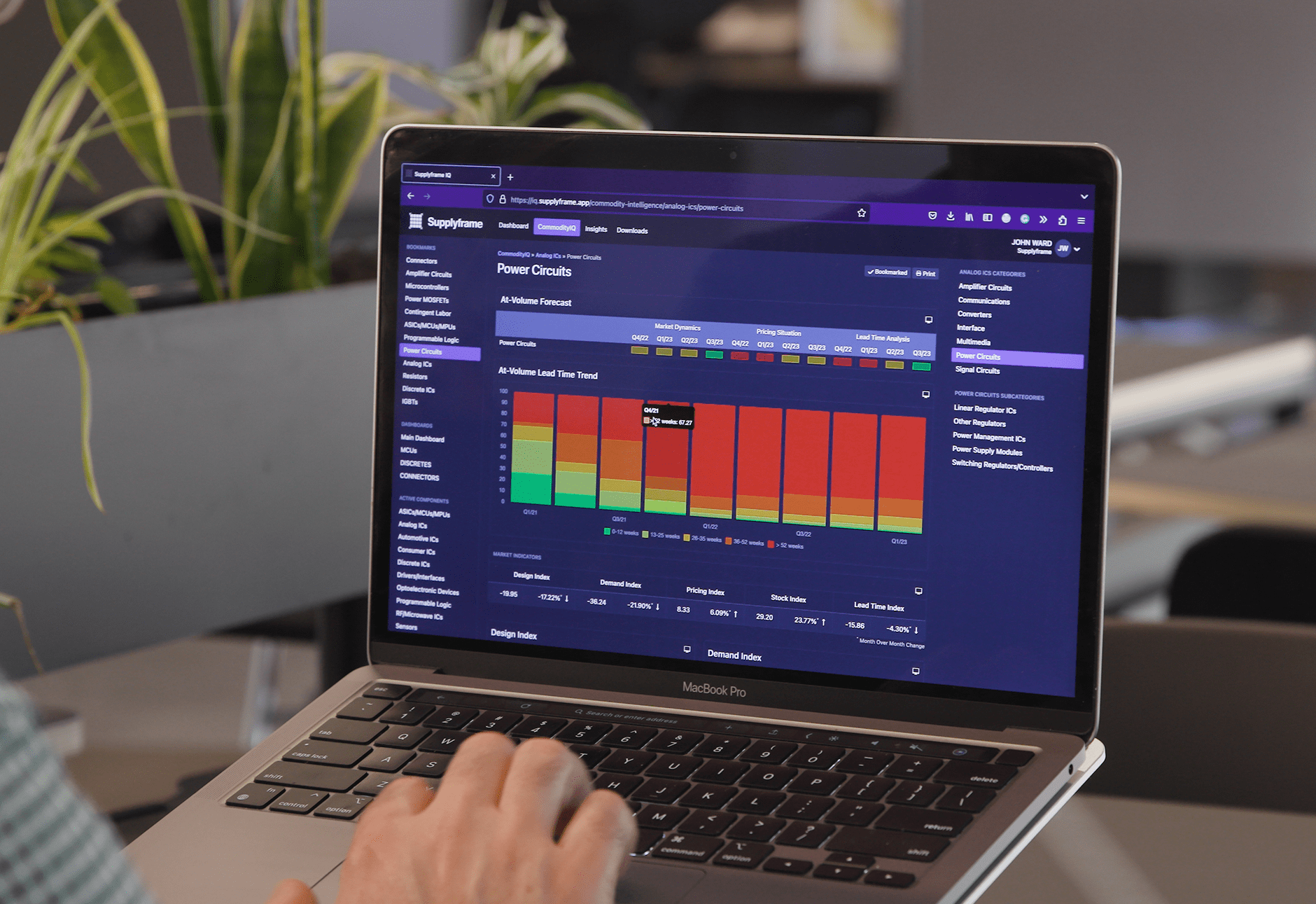
The Commodity IQ Demand Index is a metric that measures sourcing patterns, component demand, and purchasing activities around the globe.
This demand spike correlates with the following commodities:
- Batteries
- Capacitors
- Resistors
- Inductors
- Transformers
- Connectors
- Sockets
- Switches
- Relays
- Terminal Blocks
- Soldering Supplies
- Thermal Support Devices
- Optoelectronics
So, what’s the takeaway here? Our recommendation is to avoid spot purchases and quoting in the month following the Chinese New Year. Significant demand like this results in a constrained market, which could lead to higher prices in the near-term.
For more insights into the sourcing and procurement landscape, get your free Commodity IQ sample summary today, which includes a deep dive into specific commodities, including recommendation sourcing actions, and insights into current and future trends!
Learn more at Supplyframe.com